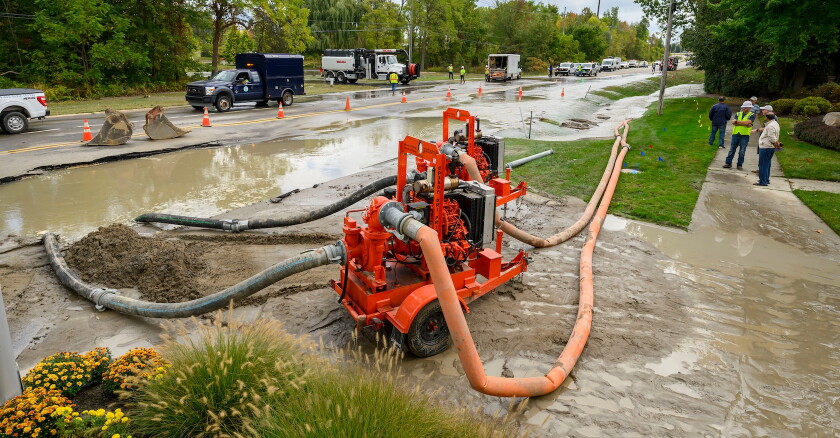
There are lots of examples of this phenomenon.
Training, for example, is often the first thing that states and localities cut to balance their budgets. But the reality is that when workers aren’t trained well, they’re going to be less effective and efficient in their efforts, and that’s a cost for the entities — and thus the taxpayers — over the long term.
As Benjamin Franklin said, “An investment in knowledge pays the best interest.”
One obvious example is when new technologies are put into place, often costing millions of dollars. The IT folks who are in charge are often sufficiently trained, but many employees who are interacting with the newest innovations aren’t even aware of the bells and whistles in the first place.
As Wiliam Brantley, president of Brantley Advanced Social Sciences Applications, wrote in late 2024: “A training department dedicated to upskilling and reskilling can improve the efficiency and effectiveness of state and local governments. Investing in human resources is a crucial aspect of governance.”
Training is just the beginning, and it’s difficult to quantify exactly what its returns are. In other areas there’s strong data to demonstrate our point.
Consider the cost of disasters. In just the first half of last year they cost about $100 billion in the United States. With the appropriate advance steps taken, huge sums of dollars can be saved — in addition to reducing the turmoil for residents who experience hurricanes, tornados, wildfires and floods. As writers for the Pew Charitable Trusts put it in a July 2025 article, “Local emergency management agencies lead disaster response and recovery, but many lack the resources, staffing and long-term planning capacity to get ahead of increasingly complex and costly events.”
In fact, an analysis conducted jointly by the U.S. Chamber of Commerce and Allstate revealed that “investments in resilience and preparedness can substantially reduce the economic costs associated with disasters.” The study found that each $1 of investments “reduces a community’s economic costs after an event by $7.”
Similarly, though cities, counties and states frequently lack the cash necessary to keep up with maintaining their infrastructure, including roads, bridges and buildings, this too is a fiscally shortsighted choice.
As Noah Winn-Ritzenberg, senior director for public finance at the Volcker Alliance, wrote in a guest column for us, “Deferring infrastructure maintenance may be a tempting relief valve as budgets become strained. Ignoring the mounting maintenance backlog, however, could imperil economic activity and future revenue as well as incur higher replacement costs down the road, only serving to deepen fiscal woes.”
It's really just common sense at work here. The downside of failing to spend the necessary dollars to keep infrastructure in shape is to eventually allow it to decay to the point where it becomes hazardous and ultimately useless. At that point, full replacement becomes necessary, which is far more expensive than keeping up with maintenance costs as they arise.
According to FacilitiesNet, an online resource for facilities management professionals, “Studies of organizations show that on average, for every dollar ‘saved’ by deferring maintenance, there comes a four dollar increase in future capital renewal costs. Those are the direct costs for that specific asset. There are additional indirect costs that may have an even larger impact. Over the life of that asset, those additional costs may total more than 15 times what would have been spent on the maintenance had it not been deferred.”
These estimates apply to all organizations, not just to states and localities, but there’s every reason to believe that the same multiplier effect applies at least as much to governments in which assets are often particularly large in scale.
One last thought here. Though it may be the case that nobody likes it when the taxman comes calling, money spent on tax audits is one of the best investments (not costs!) around.
Although most of the data about this pertains to the IRS, we have no reason to believe that the numbers are any less dramatic in cities, counties and states. And as for the feds, “an additional $1 spent auditing taxpayers above the 90th income percentile yields more than $12 in revenue, while audits of below-median income taxpayers yield $5,” according to a study done for the National Bureau of Economic Research.
There’s no question that for many taxpayers a combination of a lack of trust in government, coupled with a desire to keep this year’s taxes as low as possible, can lead their states and cities to avoid spending money regardless of the long-term benefits. That’s understandable, of course, but in many cases it’s not wise.
This commentary originally appeared on the authors’ website. Read the original here.
Governing's opinion columns reflect the views of their authors and not necessarily those of Governing's editors or management.
Related Articles